

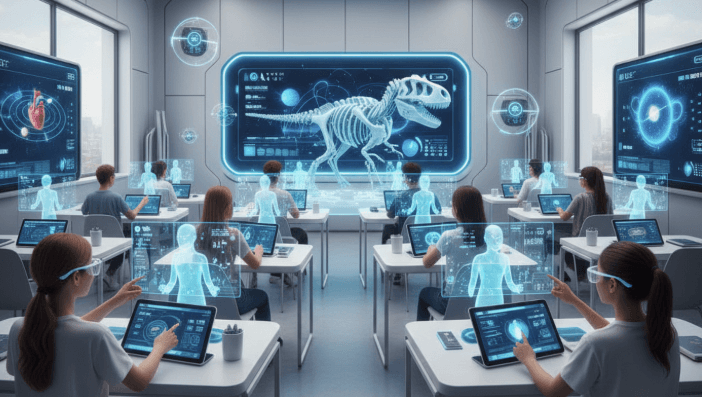
The rise of intelligent classrooms hinges on data-driven capabilities that personalize at scale. AI tutors and adaptive systems promise targeted pacing and skill alignment, backed by real-time analytics. Yet concerns about privacy, bias, and governance shape feasibility and trust. As institutions balance innovation with equity, the human classroom remains essential for oversight and facilitation. The path forward is nuanced, measurable, and contingent on transparent practices that leave stakeholders seeking clarity on the next steps.
What Makes “Intelligent Classrooms” Now Possible
The emergence of intelligent classrooms hinges on converging technologies and systematic data integration that render learning environments adaptive, scalable, and measurable.
Data governance frameworks guide stewardship of learner information, ensuring transparency and accountability.
Ethical deployment prioritizes privacy, consent, and bias mitigation while enabling broad access.
Critics warn against overreach; proponents cite measurable outcomes, cost efficiency, and autonomy.
Future classrooms demand rigorous standards, balanced innovation, and sustained public trust.
Personalization at Scale: AI Tutors and Adaptive Learning
Could AI tutors and adaptive learning systems truly scale personalized instruction across diverse classrooms, or will they perpetuate inequities under a veneer of data-driven efficiency? Adaptive analytics enables real-time pacing and skill targeting, while Tutor training shapes implementation fidelity. Critics warn of homogenized curricula and opaque metrics; proponents claim scalable personalization, data transparency, and better outcomes, if governance and continuous evaluation underpin deployment.
Balancing Innovation With Equity and Privacy
Data patterns reveal gaps in representation and potential biases, signaling the need for transparent governance.
Privacy safeguards and data ownership must be codified to empower stakeholders, ensuring accountability while fostering innovation that expands opportunity without eroding personal rights.
The Human Edge: Roles, Skills, and the Classroom of Tomorrow
In the classroom of tomorrow, human roles and skills will determine the trajectory of both learning engagement and outcomes, even as automation and analytics reshape instructional workflows.
The human edge centers on teacher autonomy and adaptive facilitation, not replacement.
Data governance ensures ethical, transparent use of insights, guiding equitable interventions while preserving learner agency and freedom to pursue individualized paths.
Frequently Asked Questions
How Will Classrooms Handle Data Security and Student Privacy?
Data security and student privacy will be safeguarded through rigorous encryption, access controls, and audit trails. The approach emphasizes transparent governance, continuous risk assessment, and user-centric privacy defaults, aligning institutional incentives with individual autonomy and freedom from data exploitation.
See also: The Role of Forums in Crypto Learning
What Are the Long-Term Costs of Intelligent Classrooms?
The long-term costs of intelligent classrooms hinge on evolving cost structures and ongoing maintenance cycles; analysts project initial capital outlays followed by recurring expenses, underscored by depreciation, software updates, and data governance requirements, shaping sustainable, freedom-centered educational futures.
How Will Teachers Stay Relevant With AI Integration?
AI pedagogy guides teachers to reinterpret roles, and Classroom ergonomics reshapes workflows; teachers stay relevant through continuous upskilling, adaptive assessment, and ethical stewardship, while data-driven experimentation fuels autonomy, collaboration, and freedom in learning futures.
Can AI Reduce Achievement Gaps Across Diverse Student Groups?
AI can reduce gaps only with robust AI equity, bias mitigation, privacy safeguards, data ownership clarity, and personalized pacing; yet concerns about platform interoperability, assessment accuracy, digital divide, creativity suppression, and long-term ROI require vigilant teacher training and transparent analytics.
What Happens to Student Creativity in Ai-Driven Learning?
A striking 62% of students show heightened engagement when AI supports creative tasks, yet creativity often narrows to algorithmic patterns. The report warns: creative risk and collaborative learnings must guide responsible, freedom-loving, future-focused educational design.
Conclusion
The data-backed trajectory of intelligent classrooms signals unprecedented scalability in personalization and analytics, yet mandates rigorous guardrails. Critics may fear dehumanization; however, evidence indicates AI tutors augment rather than replace human facilitation, freeing educators to design higher-value experiences. Sustained attention to privacy, bias mitigation, and transparent governance will determine equitable outcomes. If oversight and learner agency are preserved, the classroom of tomorrow can blend adaptive precision with humane mentorship, delivering measurable, ethically sound progress at scale.