

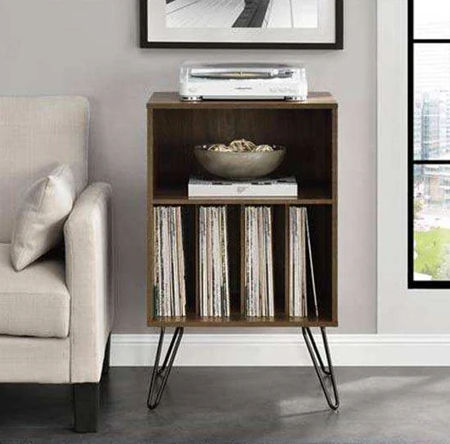
Shelving is often treated as the finishing touch to a room, somewhere to put a plant after the larger furniture has been arranged. In practice, it can solve problems that wardrobes, cupboards and occasional tables do not address particularly well. The right shelves make keys easier to find, stop paperwork spreading across a desk and give everyday belongings a clear place to return to. They can also break up a blank wall without consuming much floor space. The trick is to plan storage around the things you reach for, rather than buying shelves first and deciding what belongs on them afterwards. A few thoughtful decisions can improve several rooms at once.
PRODUCT IMAGE | Compact open shelving can add storage without overwhelming smaller rooms.
Give the Living Room Zones Instead of Piles
Start by identifying what tends to collect on the coffee table: reading material, remote controls, children’s games, chargers or decorative objects. Open shelves are useful for books and pieces you enjoy seeing, while baskets or cupboards work better for miscellaneous small items. A tall unit beside a sofa can make the most of vertical space, but ensure it does not block natural light or interfere with an adjacent door. Where floor area is precious, wall-mounted shelves can free the ground below for a small stool or storage basket.
Avoid arranging everything in one straight row. Place taller items beside shorter stacks and leave some empty space to prevent a busy appearance. Decorative objects work best when they have a practical relationship to the room: a reading lamp near a favourite chair, for example, is more useful than an ornament placed there simply to fill a gap. The aim is an organised living area that still feels comfortable and lived in.
See also: Practical Strategies to Improve Learning Platform Experience in EdTech
Make Hallways Work at Their Narrowest Point
Hallways rarely have much spare depth, which makes them an excellent test of good storage planning. Before choosing anything, measure the narrowest passage when doors are open, not only the width of the wall. Shallow picture ledges can hold post and small framed prints, while a compact shelf above a shoe area provides a home for hats or gloves. Hooks beneath a shelf are convenient for lighter everyday items, provided both the hooks and their fixings are appropriate for the load.
A closed basket for each household member can reduce morning searches without creating a row of loose possessions. Keep essentials at an accessible height and avoid sharp corners at shoulder level in a tight passage. If the entrance is dim, a pale finish and limited display can help the space feel less crowded. What matters is a clear route through the hall, not squeezing in the maximum number of shelves.
PRODUCT IMAGE | A simple shelf unit with clean lines works well in compact spaces.
Choose a Unit by Dimensions, Not Just Appearance
A useful shelving system has to accommodate real objects. Measure the height of storage boxes and the depth of your largest folders; then allow space to lift them out without scraping the shelf above. A wood shelf unit may suit a flexible living-room arrangement where books, baskets and decorative items share the same footprint, but check each model’s dimensions and construction before choosing it. Open-sided units feel visually lighter; enclosed sides can stop items slipping off the ends.
Consider shelf adjustability, stated load limits and whether a unit can be secured against tipping. Wall-mounted designs require fixings selected for the actual wall type, not just the supplied bracket. For heavy books or equipment, a sturdy floor-standing unit may be the more straightforward choice. Draw a quick elevation on paper, with the approximate heights of your belongings, to see whether the proposed spacing really works.
Create Bedroom Storage Without Visual Noise
Bedrooms benefit from storage that keeps the visible surfaces calm. Open shelves are useful for a small collection of books, a plant or a spare blanket, but too many loose accessories can make a compact room feel busy. A shelf above a chest of drawers may hold items used occasionally, while a low unit near a dressing area can contain folded knitwear in labelled boxes. Use matching containers where possible, not because everything must look identical, but because a consistent shape makes better use of space.
Think carefully before placing shelves directly over the bed. Objects should never be positioned where they could easily fall onto someone sleeping. If bedside floor space is tight, a small wall shelf at a comfortable reaching height can replace a bulky cabinet, although it may not provide enough concealed storage for everyone. Choose the solution that supports your actual bedtime routine rather than one that only looks tidy in a photograph.
PRODUCT IMAGE | A light-finished shelving piece can brighten bedrooms or informal work areas.
Keep the Home Office Practical as Work Changes
In a workspace, separate what needs to be within arm’s reach from what can live further away. Daily notebooks and reference files belong on lower, accessible shelves; archive boxes and spare supplies can occupy higher positions. Shelving next to the desk is often easier to use than storage above the monitor, where reaching and visual clutter can become irritating. Leave room around cables, ventilation openings and desk lighting, especially where electronic equipment is stored.
If more than one person uses the room, divide shelves into clear categories rather than mixing everyone’s paperwork. Review the contents at the end of a project and recycle what is no longer needed. Good shelving should respond to changing tasks: adjustable heights and moveable boxes let the same unit accommodate books one month and home-working equipment the next.
Build a System You Can Keep Tidy
Shelving succeeds when putting something away is as easy as leaving it out. Give everyday objects obvious locations, choose proportions that suit the room and leave enough spare capacity for life to happen. Open display and concealed storage both have their place; the best rooms combine them rather than treating every possession as something to show off.