

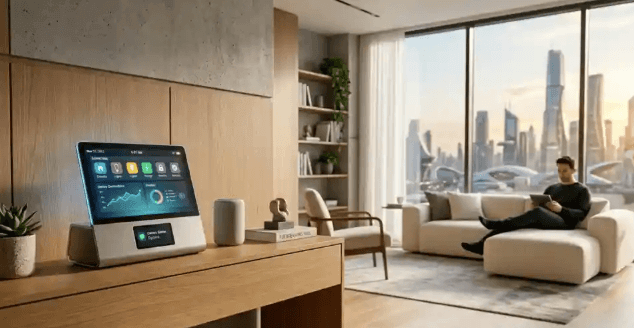
The rise of intelligent living spaces integrates sensing, control, and automation into cohesive ecosystems. Data-driven architectures map needs to actions, enabling ambient interfaces and proactive comfort. Systems learn occupancy, preferences, and environmental variables to optimize energy use and security without compromising autonomy. Design prioritizes scalability, transparency, and privacy, balancing efficiency with user control. As these spaces become more capable, questions emerge about governance, interoperability, and long-term impact—prompting further examination of how such environments evolve.
What Are Intelligent Living Spaces Really?
What are intelligent living spaces really? They are networked ecosystems that fuse sensing, control, and automation into a coherent whole. Data-driven architectures map needs to actions, reducing friction and increasing autonomy. Intuitive interfaces enable quick, purposeful interactions, while ambient intelligence anticipates contexts to optimize comfort, security, and productivity. System-centric design prioritizes scalability, transparency, and freedom from rigid, manual routines.
How They Learn Your Habits and Save Energy
Intelligent living spaces translate observed patterns into proactive actions by continuously monitoring occupancy, usage, and environmental variables. They build models of user routines and preferences, enabling habit adaptation that targets energy optimization while preserving comfort.
The approach reveals learning preferences without exposing sensitive details, yet acknowledges privacy tradeoffs. System-centric analytics forecast demand, automate responses, and sustain freedom to choose adaptive, efficient living environments.
Designing for Comfort, Privacy, and Identity
Designing for Comfort, Privacy, and Identity examines how smart spaces balance ambient ease with principled data handling, ensuring that comfort is sustained without compromising user autonomy. The approach aggregates comfort psychology insights with space ergonomics metrics, enabling transparent controls and adaptive environments. System-centric models map privacy safeguards to real-time wellbeing indicators, guiding scalable designs that honor freedom while optimizing ergonomic, data-driven comfort across diverse user profiles.
The Roadmap: Implementing an Intelligent Home (Checklist and Next Steps)
The roadmap for implementing an intelligent home translates design principles of comfort, privacy, and identity into a concrete, executable plan.
A structured checklist guides integration of sensors, devices, and platforms, emphasizing energy auditing to optimize efficiency and system health.
Decisions prioritize user consent, transparent data flows, and auditable security.
Progress is measured by interoperability, reliability, and scalable, future-ready architecture for freedom-minded households.
Frequently Asked Questions
What About the Cost of Smart Home Upgrades?
The cost of smart home upgrades varies, but a data-driven analysis shows favorable cost benefit over time; installation timelines shorten with modular systems, enabling scalable, freedom-minded homeowners to plan phased deployments and measure ROI across integrated platforms.
How Reliable Are These Systems During Outages?
During outages, these systems show varying reliability, with outage resilience improving as architectures incorporate local processing and mesh connectivity; backup power strategies, like UPS and generators, correlate to sustained functionality and user freedom in challenging conditions.
See also: The Rise of Intelligent Classrooms
Can I Customize Aesthetics and Branding?
Like a well-tuned dashboard, the system permits customization of visuals. It supports custom aesthetics and branding control, enabling users to tailor interfaces while maintaining data integrity and consistent performance across devices and environments.
Do These Systems Track Health Data?
Health data tracking is possible in these systems, enabling continuous wellness insights. Privacy concerns arise due to data collection, storage, and sharing. The design emphasizes transparency and user control, balancing autonomy with proactive, data-driven improvements in home environments.
What Happens to My Data After Sale?
Echoing the paradox of data custody, the narrative notes: after sale, data ownership transfers; privacy controls dictate access, deletion, and reuse terms, enabling freedom-focused users to review, opt out, and enforce protections within evolving, data-driven ecosystems.
Conclusion
In sum, intelligent living spaces emulate ecosystems so precisely that a single sensor array can orchestrate an entire residence with the inevitability of planetary gravity. Data flows cascade, learning every habit, optimizing energy with superhero efficiency, and recalibrating comfort to near-telepathic levels. Privacy is not an afterthought but a baseline protocol, endlessly fortified. The design trajectory is relentlessly forward, system-centric and scalable, promising homes that anticipate needs, adapt autonomously, and redefine autonomy as a communal, intelligent choreography.